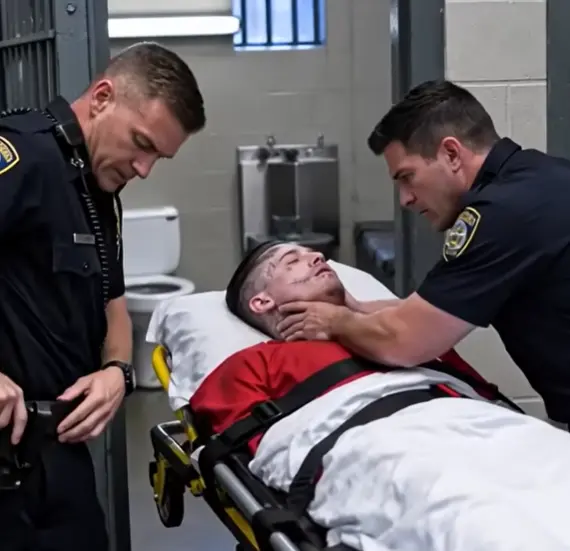
An alarming claim about convicted murderer Wade Wilson has raised questions about what happened following his death sentence. However, the reported suicide attempt has not been independently verified, and the distinction between documented court proceedings and online speculation is critical.
FORT MYERS, Florida — The case of Wade Wilson has attracted extraordinary public attention, fueled by the brutality of his crimes, the emotional testimony surrounding his trial, and the legal consequences that followed.
Now, another disturbing allegation has emerged in online discussions: that Wilson attempted suicide just 12 hours after receiving his death sentence and survived.
The claim is dramatic, deeply troubling, and capable of generating immediate public reaction.
But one essential question remains unanswered.
Is there credible evidence that the alleged incident actually occurred?
Before treating the story as a confirmed development, it is important to examine what is established about Wilson's case, what remains unverified, and why reports involving the safety of incarcerated individuals require particular care.
The Crime That Led to Two Death Sentences
Wade Steven Wilson was convicted of murdering two women in Cape Coral, Florida, on October 7, 2019.
The victims were 35-year-old Kristine Melton and 43-year-old Diane Ruiz.
According to trial reporting, Wilson killed Melton after meeting her the previous evening. Later that day, he encountered Ruiz, who also became a victim of his violence.
The two killings devastated families and shocked the Southwest Florida community.
Wilson's arrest and prosecution attracted substantial attention, particularly as details of the crimes emerged during court proceedings.
The case eventually became widely discussed online, with Wilson sometimes described by the nickname “Deadpool Killer” because he shares his name with a fictional comic-book character.
But behind the headlines were two real women whose lives were taken.
For their families, the legal proceedings represented years of grief, uncertainty, and a search for accountability.
Court TV
+1
August 27, 2024: The Day Wilson Was Sentenced
On August 27, 2024, Lee County Circuit Judge Nicholas Thompson formally sentenced Wilson to death for both murders.
The decision followed a jury's guilty verdict in June 2024 and recommendations that Wilson receive the death penalty.
The courtroom proceedings were emotionally significant for the victims' families.
Relatives had waited nearly five years for the case to reach its sentencing stage.
When the judge announced the punishment, family members expressed relief and emotion.
The sentencing marked a major milestone in one of Southwest Florida's most closely followed criminal cases.
WBBH
+1
However, the death sentences did not mean Wilson would immediately face execution.
Florida's capital punishment system includes judicial review, legal challenges, and procedures that can continue for years.
That distinction becomes particularly important when evaluating dramatic claims about what supposedly happened in the hours after sentencing.
The Mysterious “12 Hours Later” Allegation
The allegation circulating in the headline suggests that Wilson attempted suicide approximately 12 hours after receiving his death sentences.
According to the claim, he survived an incident while incarcerated.
But the central problem is the lack of independently verified documentation supporting that specific sequence of events.
The sources reviewed do not establish that Wilson attempted suicide during the 12-hour period following his August 2024 sentencing.
There is no substantiated account here identifying the exact time of such an incident, the circumstances, or an official confirmation that it occurred.
That does not justify inventing what happened behind closed doors.
A responsible investigation would require information from corrections officials, authenticated records, or reliable reporting based on identified evidence.
Without those elements, the allegation must remain unconfirmed.
And there is another important detail that may explain some of the confusion surrounding Wilson's history.
A Documented Incident Before Sentencing
Wilson's incarceration history includes a separate, previously reported drug-related medical emergency.
In 2023, while held at the Lee County Jail, Wilson experienced a drug overdose.
That incident prompted an investigation involving suspected drug trafficking inside the facility.
The subsequent case resulted in additional criminal proceedings.
On August 29, 2024, two days after receiving his death sentences, Wilson was sentenced in connection with drug-trafficking and conspiracy charges.
He received additional prison terms to run concurrently with his existing sentences.
These events are documented, but they should not be confused with the unverified claim of a suicide attempt immediately after sentencing.
LegalClarity
+1
A drug overdose and a suicide attempt are not interchangeable descriptions.
Determining whether an incident involved intentional self-harm requires evidence about the circumstances and intent.
The existence of an earlier overdose cannot establish that Wilson later attempted suicide.
What Happens After a Death Sentence?
When a defendant receives a death sentence, the legal process does not necessarily end.
Capital cases involve particularly demanding procedures because the punishment is irreversible.
Courts may examine questions involving constitutional protections, sentencing procedures, legal representation, and the application of state law.
In Wilson's case, one major issue has involved Florida's rules for jury recommendations in death penalty proceedings.
Florida changed its capital sentencing law in 2023, allowing a death recommendation without a unanimous jury vote.
During Wilson's sentencing, the jury recommended death by votes of 9–3 for Melton's murder and 10–2 for Ruiz's murder.
His attorneys subsequently challenged aspects of the sentencing process.
In February 2026, Court TV reported that his lawyers were prepared to pursue arguments before the United States Supreme Court.
Court TV
+1
These legal developments are separate from the online allegation concerning an incident in custody.
They also demonstrate why a death sentence should not be confused with an imminent execution.
The Reality of Life on Death Row
Life under a death sentence involves significant restrictions and uncertainty.
Inmates remain subject to institutional security procedures, medical services, and correctional supervision.
Their living conditions depend on the facility, security classification, and applicable state regulations.
Correctional institutions also have responsibilities concerning the safety of people in custody.
When an incarcerated person is believed to be at risk of self-harm, staff may use additional monitoring and mental health assessments.
The precise procedures vary according to institutional policies and individual circumstances.
However, general knowledge of these procedures cannot establish that any particular emergency occurred.
For Wilson, an allegation involving his safety would require the same factual verification as any other serious incident.
It would be inappropriate to describe fictional conversations between officers, invent medical interventions, or claim that staff discovered him in a particular condition without evidence.
Those details might make a story more dramatic, but they would not make it accurate.
Where Is Wade Wilson Now?
As of reporting published in 2026, Wilson remained incarcerated in Florida under his death sentences.
Reports identified Union Correctional Institution in Raiford as his place of incarceration.
His legal proceedings have continued to attract public attention, particularly concerning challenges to the death penalty and the future of his case.
No verified execution date was established in the sources reviewed for this article.
LegalClarity
+2
His case has also been revisited through true-crime documentaries and television coverage.
These productions have introduced the murders, the investigation, and the court proceedings to audiences who may not have followed the original trial.
But renewed interest creates an additional responsibility to distinguish historical facts from online rumors.
A dramatic headline can reach thousands of readers before its claims have been checked.
And once a false or unsupported account spreads, correcting the record can become difficult.
The Families Who Must Not Be Forgotten
Amid the intense attention surrounding Wilson, the lives of Kristine Melton and Diane Ruiz remain central to the case.
Both women had families, friends, and futures that were taken from them.
The impact of their deaths extends far beyond the courtroom.
Relatives have had to navigate years of grief while participating in a legal process that repeatedly brought the crimes back into public discussion.
For them, the case is not simply a headline or an online mystery.
It is a permanent personal loss.
Coverage that focuses exclusively on Wilson's appearance, notoriety, or rumored experiences in prison risks pushing the victims into the background.
Responsible reporting should preserve their identities and recognize the human consequences of the crimes.
That remains important regardless of the eventual outcome of Wilson's legal challenges.
Why the Internet Is Fascinated by the Case
Wilson's case illustrates how social media can transform criminal proceedings into widely shared online narratives.
Courtroom photographs, video clips, legal developments, and commentary have circulated across multiple platforms.
Some users focus on the severity of the crimes.
Others debate the death penalty, the justice system, or the unusual attention Wilson has received.
Sensational claims can spread particularly quickly when they contain elements of secrecy, sudden developments, or unanswered questions.
The allegation of an incident occurring just 12 hours after sentencing combines all three.
It suggests a dramatic event behind prison walls.
It presents an unusually precise timeline.
And it invites readers to speculate about information that supposedly has not been made public.
But the specificity of a claim does not make it credible.
A precise number such as “12 hours” still requires documentary support.
Without that support, repetition can turn speculation into something that appears factual even when it has never been established.
The Questions That Remain Unanswered
Several important questions would need answers before the allegation could be responsibly reported as confirmed.
Was an incident formally documented by corrections personnel?
Did authorities issue a statement confirming that Wilson required emergency assistance?
Was there a reliable medical or investigative record establishing the nature of the event?
And, most importantly, does any verified evidence connect such an incident to the 12 hours immediately following the sentencing?
The available reporting reviewed here does not answer those questions affirmatively.
Until reliable documentation emerges, the most accurate description is that the alleged suicide attempt remains unverified.
This distinction protects readers from misinformation and prevents an unsupported claim from being presented as a new development.
Final Thoughts: The Truth Behind the Headline
Wade Wilson's case is already one of the most disturbing and widely discussed murder prosecutions in recent Florida history.
The documented facts are serious enough without additional speculation.
Two women were murdered in October 2019.
Wilson was convicted in June 2024.
He received two death sentences on August 27, 2024.
His incarceration history includes a documented drug-related emergency from 2023, and his legal case has continued through appellate proceedings.
Those facts are supported by court records and established reporting.
The dramatic allegation that he survived a suicide attempt just 12 hours after sentencing is a different matter.
No reliable evidence reviewed for this article confirms that specific event.
The unanswered question is therefore not what officers supposedly discovered or what Wilson allegedly said afterward.
It is whether the incident described in the viral claim happened at all.
Until that question can be answered through credible evidence, the story should not be presented as breaking news.
And amid the continued attention surrounding Wilson, the names of Kristine Melton and Diane Ruiz deserve to remain at the center of the public record.
Because the most important truth in this case is not an unverified rumor from behind prison walls. It is the documented loss of two lives and the pursuit of justice that followed.
Reporting note: The death sentences, victims' identities, earlier overdose, and legal proceedings are documented. The claimed suicide attempt 12 hours after sentencing has not been verified by the sources reviewed.
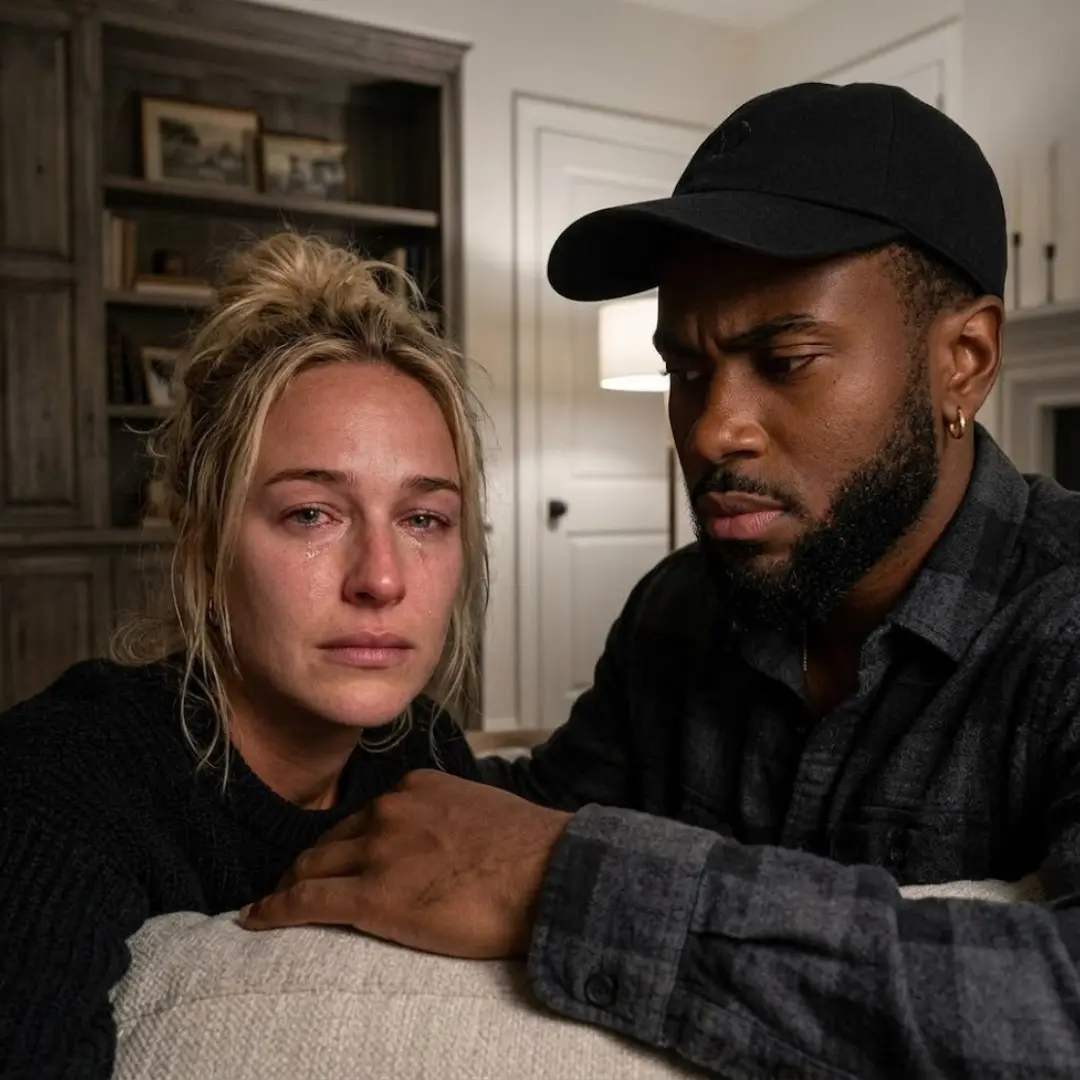
An imagined family-centered moment involving Indiana Fever star Sophie Cunningham offers a powerful reminder that behind the intensity of professional basketball are personal relationships, sacrifices, and the people who help athletes through their most difficult days.
INDIANAPOLIS, Indiana — Sometimes, the most meaningful moments in professional sports have nothing to do with the scoreboard, the final buzzer, or the roar of thousands of fans.
Sometimes, they happen quietly, surrounded by family.
In an imagined emotional scene unfolding in Indianapolis, Indiana Fever guard Sophie Cunningham finds herself at the center of a deeply personal moment involving the people who have supported her throughout her basketball journey.
The fictional story begins with an unexpected family gathering, an emotional conversation, and a realization that even the strongest professional athletes sometimes need the reassurance of those closest to them.
For Cunningham, whose competitive personality and outspoken confidence have made her a recognizable figure in women's basketball, such a moment would reveal a different side of the athlete fans are accustomed to seeing.
And for the Indiana Fever community, it would serve as a reminder that the players they cheer for are also daughters, sisters, friends, and individuals navigating life beyond basketball.
An Emotional Moment Away From the Spotlight
In this imagined Indianapolis scene, Cunningham is spending time with family after a demanding stretch of professional responsibilities.
There are no cameras documenting every movement.
No reporters asking about the next opponent.
No coaches discussing defensive assignments.
Instead, the atmosphere is quiet and personal.
Cunningham sits beside her family, listening as they reflect on the sacrifices, challenges, and unforgettable experiences that have shaped her career.
The conversation gradually becomes emotional.
Memories of early basketball practices, long drives to tournaments, and the uncertainty surrounding her professional future begin to surface.
What starts as a simple family conversation becomes a powerful reminder of how far she has traveled.
In the fictional moment, Cunningham grows visibly emotional as her loved ones remind her that their pride is not measured by points scored, games won, or public recognition.
Their support exists regardless of what happens on the basketball court.
It is the kind of reassurance that can carry enormous meaning for a professional athlete.
The Family Behind Sophie Cunningham's Basketball Journey
Long before Cunningham became an established WNBA player, basketball was already an important part of her life.
Born in Columbia, Missouri, she developed her skills through years of competition, training, and dedication.
Her talent eventually led her to the University of Missouri, where she became one of the program's most recognizable players.
At Missouri, Cunningham built a reputation for competitive intensity, scoring ability, and leadership.
She became a central figure in the Tigers' women's basketball program and earned national attention for her performances.
But reaching that level required more than individual ambition.
Like many professional athletes, Cunningham's journey involved extensive travel, demanding schedules, physical preparation, and the emotional challenges of high-level competition.
Family support can play an essential role throughout those experiences.
Parents and relatives often provide transportation, encouragement, financial assistance, and stability during an athlete's development.
They celebrate victories but also witness the disappointment that follows difficult losses.
In Cunningham's case, the significance of family is an important part of understanding the person behind her public basketball identity.
From Missouri Star to WNBA Competitor
Cunningham entered the WNBA after being selected by the Phoenix Mercury in the 2019 draft.
The transition from college basketball to the professional level introduced new challenges.
WNBA players face elite competition, demanding travel schedules, and constant pressure to improve.
For young athletes, establishing a place in the league can require considerable patience.
Playing time is not guaranteed.
Roles can change.
Coaching strategies evolve.
And every season brings new expectations.
Cunningham gradually developed into a player known for her perimeter shooting, physical approach, and willingness to compete in difficult situations.
Her energetic personality also helped make her recognizable to fans.
She has never been a player who easily disappears into the background.
Whether celebrating a successful play or responding to intense competition, Cunningham frequently displays the emotion associated with her style of basketball.
That visible toughness makes the imagined family moment especially compelling.
It offers a contrast between the confident athlete fans see during games and the more vulnerable person who exists beyond the arena.
A New Chapter With the Indiana Fever
Cunningham's move to the Indiana Fever introduced her to another passionate basketball environment.
Indiana has become one of the WNBA's most closely followed franchises, attracting considerable attention from fans across the United States and beyond.
The presence of players such as Caitlin Clark, Aliyah Boston, and other talented teammates has helped create enormous interest in the organization.
For Cunningham, joining a new team also means adapting to different expectations.
Players must develop chemistry with teammates, understand new systems, and find ways to contribute within the coaching staff's approach.
These adjustments can be demanding even for experienced professionals.
The attention surrounding Indiana adds another dimension.
Every performance can generate discussion.
Every difficult game can produce criticism.
And every public appearance may attract significant attention.
Against that backdrop, the fictional family gathering offers an important contrast.
While the basketball world focuses on statistics and results, Cunningham's loved ones are concerned with something more personal: her happiness, confidence, and well-being.
When the Strongest Athletes Show Their Emotions
Professional athletes are frequently celebrated for their mental toughness.
They are expected to compete through adversity, manage criticism, and maintain confidence under extraordinary pressure.
But toughness does not mean the absence of emotion.
Athletes experience uncertainty, disappointment, exhaustion, and personal challenges just like anyone else.
In the imagined scene, Cunningham's emotional reaction is not presented as weakness.
Instead, it reflects the significance of the relationships that helped her reach professional basketball.
As the family conversation continues, she remembers the countless moments when loved ones offered encouragement during difficult periods.
Some memories bring smiles.
Others bring tears.
And eventually, the fictional gathering becomes a celebration of perseverance rather than a moment defined by sadness.
The message is simple but meaningful.
No athlete reaches the highest level entirely alone.
The Personal Cost of Professional Sports
The public often sees the glamorous side of professional athletics.
Televised games, packed arenas, endorsement opportunities, and national recognition can make an athlete's life appear extraordinary.
But the demands behind those moments are substantial.
Professional basketball players spend countless hours trainin

Their schedules can separate them from family members for extended periods.
Important personal events may take place while they are away with their teams.
Physical injuries can create uncertainty about their careers.
And public criticism can add emotional pressure to an already demanding profession.
For athletes who compete with Cunningham's intensity, maintaining balance can be especially important.
A supportive family environment can provide perspective when basketball becomes overwhelming.
In the fictional Indianapolis gathering, that support becomes the central theme.
Her family reminds her that a difficult performance does not define her character.
A missed shot does not erase years of dedication.
And public expectations should never determine her value as a person.
Why the Indiana Fever Community Connects With Personal Stories
The Indiana Fever fan base has grown into a passionate community with a strong interest in the players' lives beyond basketball.
Supporters celebrate individual achievements, team victories, and the personalities that make the roster distinctive.
Cunningham's confidence and willingness to express herself have helped her develop a recognizable public identity.
But emotional stories can create a different kind of connection.
Fans may admire a player for making difficult shots or competing fearlessly.
They may connect even more deeply when they recognize familiar human experiences.
Family relationships, sacrifice, gratitude, and resilience are not unique to professional athletes.
They are experiences shared by people from many backgrounds.
That is why an imagined family-centered story involving Cunningham can resonate emotionally without requiring an extraordinary event.
Its power comes from something ordinary but important: the reassurance of being surrounded by people who care.
Caitlin Clark, Teammates, and the Importance of Support
Team chemistry extends beyond basketball strategy.
Players spend significant time together during practices, games, travel, and recovery sessions.
They experience both success and disappointment as a group.
For the Fever, maintaining a supportive environment is important because the team operates under considerable public attention.
Caitlin Clark's popularity has contributed to increased interest in Indiana, while the broader roster continues working toward collective success.
Cunningham brings a distinctive competitive personality to that environment.
Her willingness to play physically and express emotion can energize teammates and supporters.
But strong teams also benefit from understanding that athletes have personal lives beyond their professional responsibilities.
In a hypothetical situation where Cunningham experienced an emotional family moment, the most meaningful response from teammates would likely involve respect, understanding, and privacy.
Not every personal experience needs to become a public spectacle.
Sometimes, allowing a teammate space to spend time with loved ones is itself an important expression of support.
A Reminder That Family Matters More Than Headlines
As the imagined family gathering continues, the atmosphere gradually becomes warmer.
The emotional conversation gives way to shared memories and quiet laughter.
Cunningham reflects on the people who supported her before professional recognition arrived.
They believed in her when success was uncertain.
They encouraged her when progress was difficult.
And they remained part of her life as basketball introduced new opportunities and responsibilities.
In the fictional scene, one realization stands above everything else.
Professional achievements may change an athlete's circumstances, but meaningful relationships provide a different kind of stability.
Championship aspirations matter.
Career milestones matter.
The opportunity to compete at the highest level matters.
But those accomplishments exist alongside the personal relationships that give life meaning beyond competition.
What This Story Represents for Women's Basketball
Women's basketball continues to attract growing attention, with players increasingly recognized for their athletic achievements and individual personalities.
That visibility creates opportunities to tell stories extending beyond game results.
Fans can learn about the experiences that shape athletes, the challenges they overcome, and the relationships that support their careers.
At the same time, responsible storytelling requires respecting the difference between verified events and imagined narratives.
An emotional headline should not be treated as proof that a tragedy, medical emergency, or family crisis has occurred.
Without confirmation, speculation can create unnecessary concern for athletes and their loved ones.
The fictional Cunningham story is therefore best understood as a reflection on family support rather than a report of a real emergency.
Its emotional themes are universal even though the described gathering is imagined.
Final Thoughts: Behind the Competitive Spirit Is a Human Story
Sophie Cunningham is known to basketball fans for her energy, determination, and competitive personality.

Her journey from Missouri to the WNBA reflects years of dedication and perseverance.
But the fictional Indianapolis moment offers a reminder that professional success is only one part of an athlete's life.
Behind every game is a person with relationships, memories, and responsibilities that extend far beyond basketball.
Behind every confident performance may be years of encouragement from family members who witnessed the difficult moments that fans never saw.
And behind every athlete's public image is a private life deserving of understanding and respect.
For the Indiana Fever community, the message of this imagined story is not about an unexpected tragedy or shocking revelation.
It is about the people who remain present when the cameras are gone.
Because the greatest victories in life are not always celebrated beneath arena lights. Sometimes, they are found in the quiet reassurance of family, the strength of unconditional love, and the knowledge that no matter what happens on the court, someone will always be there.
And for Sophie Cunningham, that is the heart of this imagined emotional moment.